
Introduction
Fear often enters the picture when we challenge ourselves. Whether it’s standing in front of an audience, pushing our body beyond its comfort zone, stepping onto a mountain ridge, entering deep water, or speaking a language that isn’t our native tongue, fear can whisper stories of inadequacy and danger. In 2025, I chose to confront these fears head-on. Each experience not only changed me internally but also opened doors to new communities. As I leaned into them, I discovered that my fears weren’t just about the present moment; they were rooted in a story from my past—an old belief uncovered in therapy that convinced me these experiences were dangerous. Recognising that limiting belief allowed my mind to see the truth, yet my body and nervous system still needed repeated safe experiences to catch up. Understanding and rewriting this subconscious program became a key part of my journey. Now, as the year draws to a close, I can look back on these challenges, the connections I’ve made, and feel genuinely proud of the progress I’ve achieved.
Confronting the Fear of Public Speaking
Public speaking has long been one of my greatest fears. The worry that I might stumble over my words or reveal my insecurities has, at times, been paralysing. My accent felt like a flaw, my hands would tremble, and my mind would race. Perfectionism often crept in, telling me that if I wasn’t flawless, I wasn’t enough.
Through therapy, I uncovered an old narrative—an experience from my past that taught me it was unsafe to be seen or heard. This story had taken root as a limiting belief, guiding my nervous system to react with fear. Once I recognised that this belief was outdated, my conscious mind could let it go. But it took practice and patience for my body to learn this new truth.
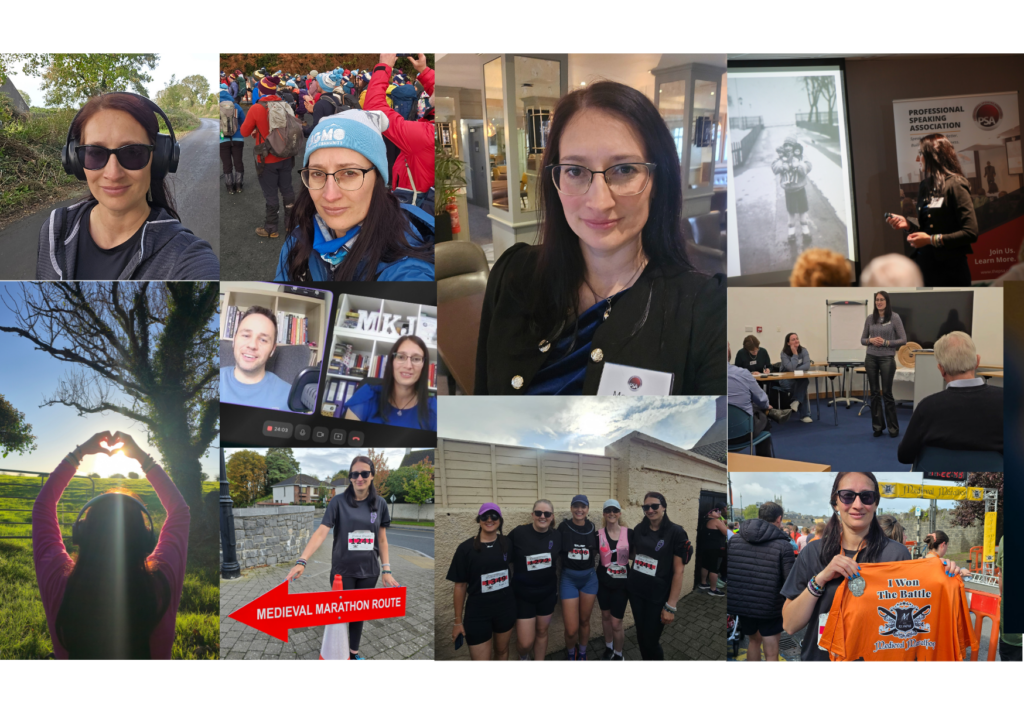
Early in the year, I decided to invest in my growth by becoming a member of the Professional Speaking Association in January. Immersing myself in a community of experienced speakers gave me tools, mentorship, and a supportive network. Before I ever spoke at a formal event, I had the chance to be a guest on James Dean’s podcast “What is Important to You”. It was my first experience recording and answering questions spontaneously in English. I wasn’t prepared for some of the questions, which made it an intense training ground—but it also taught me to trust my voice and helped ease the fear of not knowing what to say. The experience made me realise that even impromptu speaking could be an opportunity to learn and grow.
Then, in November, I joined Toastmasters to challenge myself further and practice what I’d learned in a structured environment. These decisions became turning points: they offered regular opportunities to speak and to recondition my nervous system to feel safe on stage.
This year, I reached a milestone: in November, I stood on stage twice. Each time, I consciously focused on teaching my nervous system to feel safe in the spotlight. By facing this fear throughout 2025, each speech became not just a performance but a practice in self-awareness and resilience. Joining the Professional Speaking Association, the podcast experience, and Toastmasters also introduced me to fellow speakers and supportive audiences, expanding my network in ways I hadn’t expected.
Overcoming the Fear of Running
My relationship with running also began with fear—fear of failure, of physical pain, and of not measuring up. At the beginning of my training for the 10 km race in the Kilkenny Marathon, even running 5 km felt like a mountain. It was hard to imagine finishing the 10 km event in September. This fear wasn’t just about my legs; it was tied to the same old belief that pushing myself could be dangerous.
Yet, by stepping into that discomfort, something changed. I pushed through, learned from each struggle, and gradually built strength. When I completed 10 km training runs—not once, but twice—my confidence surged. Those training milestones reassured me that I could complete the 10 km on marathon day. Each milestone in 2025 taught me that my fear wasn’t telling me to stop; it was challenging me to:
- Listen to my body: Understand when to push and when to recover.
- Embrace incremental progress: Realise that endurance is built step by step.
- Celebrate personal milestones: See each run, no matter the distance, as a victory against fear.
Running revealed another layer of that subconscious program—an inner voice insisting I had to achieve more to be worthy. Recognising this pattern allowed me to reframe my relationship with exercise. Running continues to teach me that courage isn’t the absence of fear but the willingness to move through it. It also connected me with other runners—people who share their own stories of struggle and triumph—which has enriched my life with new friendships.
Facing the Fear of Heights in Hiking
Hiking is where my fear of heights meets my love for nature. Standing at the edge of a ridge or crossing a narrow path can send my heart racing and my mind spinning with worst-case scenarios. Yet, it’s these moments that call me to find balance and trust. And beneath the surface, there was that same old story warning me to stay safe by staying small.
Working through this fear means:
- Breathing through the anxiety: Using deep, steady breaths to calm my nervous system.
- Focusing on the present: Keeping my attention on each step rather than the intimidating view.
- Acknowledging progress: Recognising that every time I confront a steep climb, my confidence grows.
Throughout 2025, hiking reminded me that fear is part of the journey, not a barrier to the destination. It also introduced me to fellow hikers and outdoor enthusiasts, strengthening my sense of community and shared adventure. In the process, I saw how my subconscious program equated safety with control. By letting go of that need, I allowed new experiences to reshape the belief and help my body trust that I was safe.
Facing the Fear of Deep Water
For seventeen years, I lived close to the ocean but never entered its waves. I told myself I simply didn’t like being wet. Yet, I had no problem with swimming pools. Deep down, I sensed something else was at play. In therapy, we discovered that a story from my past had convinced me that deep water was dangerous. This limiting belief had kept me on the shore, eyes fixed on an ocean I loved but couldn’t touch.
With this new awareness, I knew my mind had the power to reframe the fear, but my body still remembered the danger. The turning point came last May during a women’s circle. My best friend reached out, held my hand, and together we stepped into the ocean. The touch of the water on my feet, the support of a friend, and the safety of the circle helped my nervous system experience the ocean differently. In that moment, I wasn’t just overcoming a fear; I was rewiring a belief. Now, each visit to the shore reminds me that some fears are tied to old stories—and that new stories can replace them.
Navigating Perfectionism in a Second Language
Learning and speaking English as my second language has been a study in vulnerability and perfectionism. I often worried that my mistakes would make me look foolish or that my accent would reveal my foreignness. The fear of not being good enough led me to hesitate, correct myself obsessively, and, at times, avoid speaking altogether. This fear, too, had roots in that old story: that making mistakes was dangerous.
However, confronting this fear over the past year has taught me that:
- Communication is connection: Expressing genuine thoughts matters more than flawless grammar.
- Perfectionism isn’t a requirement: Mistakes are part of learning and growth.
- Feeling “enough” is internal: Confidence comes from within, not from external validation.
In examining my subconscious program, I saw how deep the roots of perfectionism ran. A belief that mistakes equalled failure kept me silent. Embracing imperfections, I’ve found joy and freedom in expressing myself in a new language. Connecting with others—native speakers and fellow learners alike—has shown me that language is a bridge, not a barrier. Through these conversations, I’m teaching my nervous system that it’s safe to be myself in any language.
Closing Reflections
The fears and perfectionism I faced during 2025 have taught me that growth is rarely comfortable. Yet, each time I confronted a fear—whether on stage, on the trail, on the track, in deep water, or in conversation—I collected evidence that I’m more resilient than I once believed. These experiences didn’t just stay within me; they helped me build a network of amazing people who inspire and support me. They also brought a profound realisation: the underlying program in my subconscious, fueled by an old story from my past, was shaping my reactions. Therapy helped me see that the story wasn’t true, but it was through practice and patience—and joining supportive communities—that my body and nervous system began to feel safe.
By bringing that program into awareness and pairing it with new experiences, I’m able to rewire my responses and create new patterns of safety and confidence. As this year comes to an end, I’m proud of the courage it took to keep moving forward, grateful for the connections I’ve made, and excited about the ongoing journey of self-understanding and healing.
When you face your own challenges, remember:
- Acknowledge fear without judgment.
- Use discomfort as information.
- Celebrate progress, no matter how small.
- Reach out and connect: Your journey often leads you to people who will walk alongside you.
- Teach your nervous system: Repetition and gentle exposure can transform fear into safety.
- Examine your subconscious: Uncovering and understanding hidden beliefs can change everything.
Every step through fear is a step toward self-discovery, resilience, and connection. The journey isn’t about becoming fearless; it’s about learning to move forward, even when fear is present, and recognising the programs running beneath the surface. And now, as I look back on 2025—especially those January and November milestones in public speaking, the training runs that prepared me for the Kilkenny Marathon, the women’s circle that took me into the ocean, the podcast experience that taught me to speak without preparation, and the therapy sessions that uncovered the story behind it all—I’m grateful for the growth it brought and proud of the person I’m becoming.
Ready to explore your own limiting beliefs? I offer one‑on‑one sessions tailored to help you move through fear and find your voice. Reach out to schedule a free discovery call
